
What’s the Difference Between CBG and CBGA?
CBG and CBGA might sound like the same compound with a letter added, but the extra “A” points to a real chemical difference. CBGA is the form found in raw cannabis plants; when it’s heated it changes into CBG.
That chemical change is why the two names are related, but not interchangeable.
Key Takeaways
- CBGA (cannabigerolic acid) is the acidic precursor that produces several major cannabinoids.
- Heating CBGA can produce CBG (cannabigerol).
- People often call CBGA the “mother cannabinoid” because plant enzymes convert it into the precursors of THC, CBD, and CBC.
- Researchers have not found that either CBG or CBGA produces the intoxicating high associated with THC.
- Researchers have focused most human studies so far on CBG, and the findings are early.
What Is CBGA (Cannabigerolic Acid)?
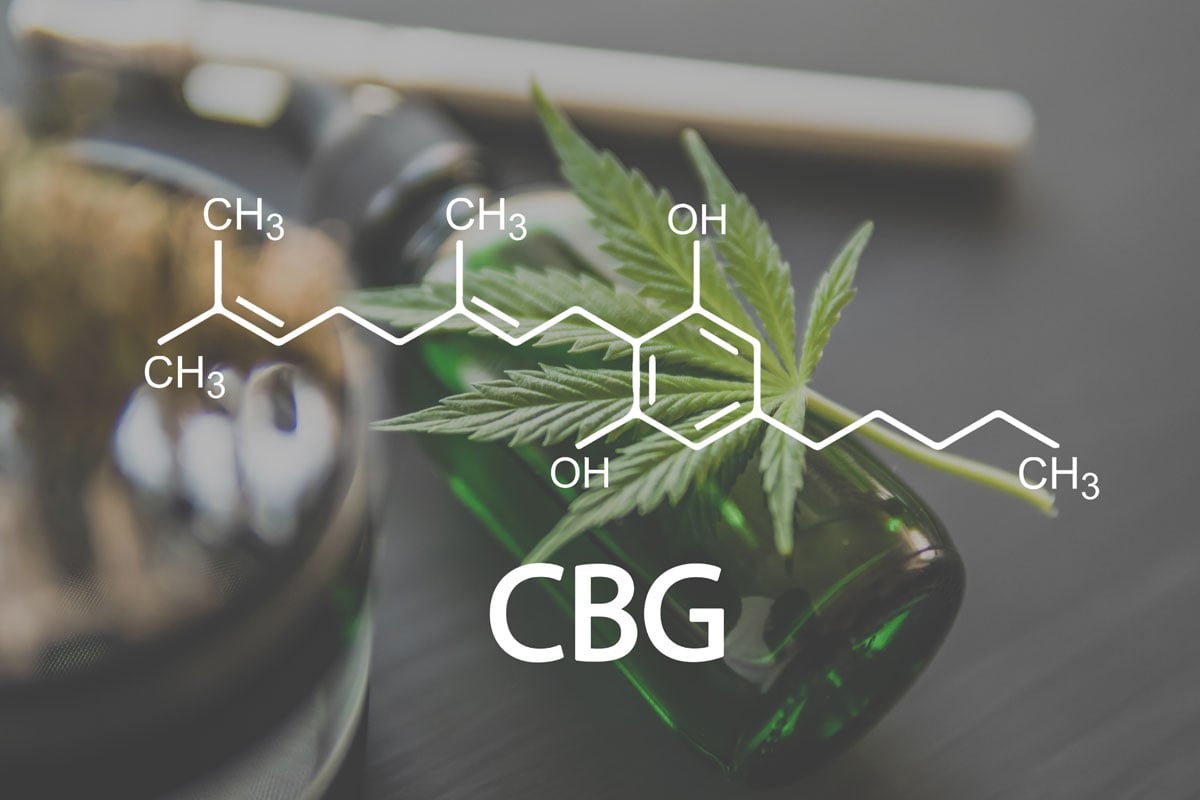
CBGA is the common starting point for several cannabinoid production pathways in the cannabis plant. Specific plant enzymes convert CBGA into THCA, CBDA, or CBCA, which are the precursors to THC, CBD, and CBC. Even cannabinol (CBN), which forms when THCA oxidizes, traces back to CBGA.
That central role has led many to nickname CBGA the “mother cannabinoid.”
What Is CBG (Cannabigerol)?
CBG forms when CBGA loses its acidic carboxyl group through decarboxylation, a chemical reaction that does not need plant enzymes.
It’s the same basic reaction that turns THCA into THC and CBDA into CBD, just along a different branch of the cannabinoid pathway.
Why Is CBG Harder to Find Than THC or CBD?
The plant converts most of its CBGA into other cannabinoids before harvest, so CBG exists in much smaller amounts than THC or CBD. That scarcity leads to practical consequences. In a 2023 University of Manchester study, researchers pointed out that cannabis extracts contain only small quantities of these less abundant compounds. They engineered bacteria to produce CBG, marking the first time anyone had made it in a whole-cell bacterial system. The method yielded only tiny amounts, though.
Researchers say they must do much more work before this approach can produce CBG at commercial scale.
Does CBG Get You High?
No. Researchers haven’t found that CBG causes a THC-like high. That fits what they understand about how it works.
The body’s endocannabinoid system (ECS) is a network of receptors and signaling molecules that helps regulate functions including mood, pain, appetite, memory, and sleep. A 2024 review of CBG’s molecular mechanisms describes how CBG interacts with the body’s two main cannabinoid receptors. CB2 receptors are found mostly in immune cells and body tissues, and CBG partially activates them.
CB1 receptors are the ones in the brain most closely tied to THC’s intoxicating effects; CBG shows minimal direct activation of them.
How Else Might CBG Affect the Body?
The same review notes that CBG may also work in less direct ways:
- Indirect effects on the endocannabinoid system: CBG may slow down an enzyme that breaks down anandamide, one of the body’s own cannabinoids.
- Interactions with other systems: CBG also appears to act on certain TRP channels and serotonin receptors.
The authors say the mechanisms behind CBG’s effects remain largely unclear, with many questions unanswered. The research section below sticks closely to what studies show.
What Does the Research Say About CBG and CBGA?
Research on CBG is growing, though it is still at an early stage. In a 2024 double-blind, placebo-controlled trial, 34 healthy adults took a 20 mg oral dose of CBG on one occasion and a placebo on another, and completed the study outside a laboratory setting. Participants reported statistically significant reductions in anxiety and stress, along with improved verbal memory performance, and researchers saw no signs of intoxication or motor impairment.
The authors described the results as preliminary and said researchers need larger, more diverse studies. The trial looked at acute effects after a single dose, so it says nothing about longer-term use. It also tested CBG, not a comparison between CBG and CBGA.
Researchers have studied CBGA less extensively. Most knowledge comes from laboratory and biosynthesis studies, not clinical trials in people.
That gap explains why we can describe what CBGA is and how it relates to CBG, but cannot say much about how it affects the body.
CBG vs. CBGA FAQs
Does heating cannabis turn CBGA into CBG?
Yes. Heat strips CBGA of its acidic carboxyl group through a reaction called decarboxylation, which turns it into CBG. The same process turns THCA into THC and CBDA into CBD.
Is CBGA the same as THCA or CBDA?
No. CBGA comes first: enzymes in the cannabis plant convert it into THCA, CBDA, and CBCA. Those acidic compounds then become THC, CBD, and CBC.
Can CBG cause impairment?
In a small 2024 clinical trial, healthy adults took a single 20 mg dose of CBG, and researchers saw no signs of intoxication or motor impairment. The researchers called the findings preliminary, and the study didn’t look at longer-term use.
Why does cannabis contain less CBG than THC or CBD?
The plant converts most of its CBGA into other cannabinoids before harvest, leaving only a small amount to become CBG. As a result, cannabis contains much less CBG than THC or CBD.
Have researchers studied CBGA in people?
Not much. Researchers have studied CBGA mostly in laboratory and biosynthesis settings rather than in human clinical trials. As a result, scientists still know little about how CBGA affects the body.
Where to Find CBG Products in Pennsylvania
If you’re curious about products that list CBG, our team at Restore Dispensaries can help you understand the cannabinoid information on the label and talk through the options available.
Stop by one of our locations or browse our menu online to see what’s currently in stock.
Follow us on Facebook and Instagram to stay in the loop.
DISCLAIMER: The contents of this blog are intended for informational purposes only. Always seek the advice of a physician or other qualified healthcare provider with any questions you may have regarding a medical condition.