

Quick Summary: Cannabis contains 100+ cannabinoids beyond THC, each interacting differently with your body’s endocannabinoid system. While THC drives the classic high, non-intoxicating options like CBD, CBG, and CBC offer relief without euphoria. CBN supports sleep, THCV suppresses appetite, and terpenes shape flavor and effects. Understanding them all helps you shop smarter.
When most people think about cannabis, THC is usually the first thing that comes to mind. It’s the cannabinoid responsible for the classic “high” feeling, and it’s the one that regulation, lab testing, and consumer conversation largely center around.
However, the cannabis plant produces more than 100 cannabinoids, and THC is only one of them. Many of these lesser-known compounds play a meaningful role in the effects of cannabis.
Understanding these cannabinoids can help you make more informed choices at the dispensary. Whether you’re looking for something energizing, calming, or somewhere in between, this knowledge is invaluable.
Now, here’s a closer look at some of the cannabinoids beyond THC.
Key Takeaways:
- Cannabis contains 100+ cannabinoids, and each interacts with your body’s endocannabinoid system in different ways.
- Not all cannabinoids get you high; CBD, CBC, CBG, and CBGA are non-intoxicating, while THCV and Delta-8 are only mildly intoxicating.
- People often choose CBN for evening or sleep-focused products.
- The cannabis plant forms terpenes alongside cannabinoids in the same resin glands, but these compounds work differently in your body.
What Are Cannabinoids?
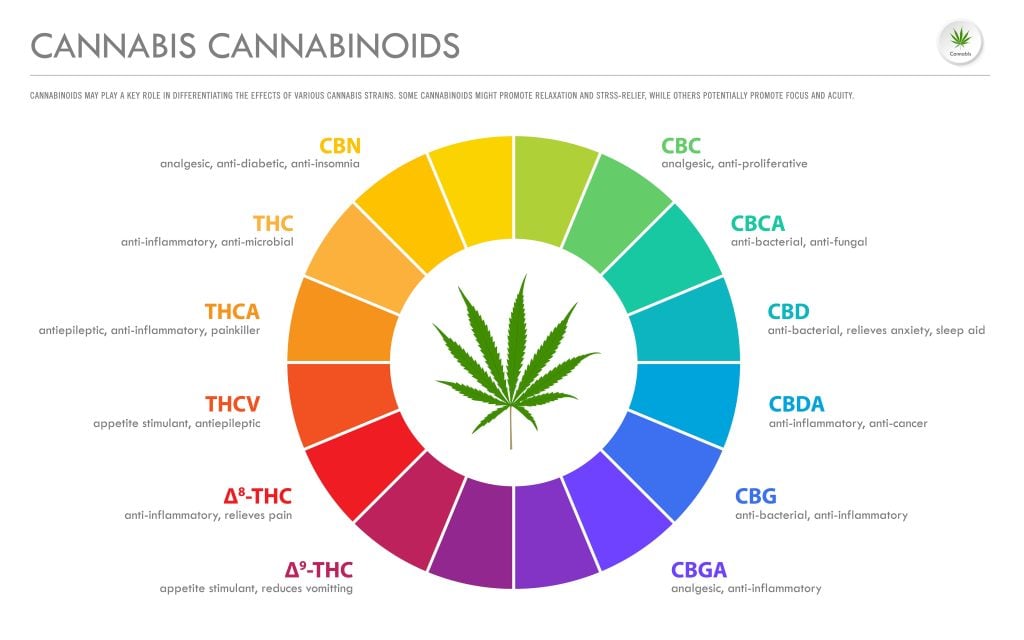
First, a quick primer. Cannabinoids are chemical compounds produced in the resin glands, or trichomes, of cannabis plants. THC and CBD are the two best-known cannabinoids, but there are dozens of others such as CBN, CBG, and THCV.
Cannabinoids interact with our endocannabinoid system (ECS), a natural biological system that likely plays an important role in regulating functions like sleep, appetite, and mood.
THC
THC (tetrahydrocannabinol) is the most abundant intoxicating cannabinoid. For instance, THC-dominant cannabis typically contains anywhere from 10% to 30% THC. Raphael Mechoulam first isolated it in 1964, and decades later, most research and cannabis regulation still centers on this compound. Under federal law, the distinction between hemp and cannabis is that hemp contains less than 0.3% THC.
Associated with: euphoria, relaxation, shift in sensory perception.
THCA
THCA is the raw, non-intoxicating precursor to THC. Specifically, it’s present in freshly harvested cannabis flower before you apply any heat. When you expose THCA to heat, whether through smoking, vaping, or cooking, it converts into THC through a process called decarboxylation. This is why raw cannabis flower won’t get you high; that conversion must happen first.
Associated with: neuroprotective, antioxidant, anti-nausea properties.
THCV
THCV is a cousin of THC. It typically appears at under 1% in most cannabis, though certain landrace and selectively bred strains can reach 4–5%. At lower amounts, THCV is generally considered non-intoxicating; at higher concentrations, it can become mildly intoxicating. It’s known as an appetite suppressor and anxiety reducer.
Associated with: energy, suppressing appetite.
Delta-8 THC
Delta-8 THC is found in trace amounts in the cannabis plant. It’s similar to THC, but binds differently to your body’s cannabinoid receptors, producing a milder, more subtle intoxicating effect. Producers can extract Delta-8 from hemp in addition to cannabis. When the 2018 Farm Bill legalized hemp under federal law, manufacturers started producing Delta-8 THC products to meet consumer demand in states without legal cannabis.
Associated with: mild euphoria, relaxation.
CBC
CBC (cannabichromene) is a non-intoxicating cannabinoid that typically appears below 0.5% in cannabis. Along with CBD and THC, medical researchers consider it one of the major cannabinoids. CBC is not intoxicating. It is known for increasing levels of anandamide, an important natural endocannabinoid in the body. Research suggests it may be helpful for conditions like cancer, Alzheimer’s disease, pain, inflammation, depression, and acne.
Associated with: supporting physical comfort, mood, and general wellness.
CBD
CBD (cannabidiol) is a non-intoxicating cannabis compound. People commonly use it for a variety of medical applications, including relief from pain, anxiety, and seizures. It is a staple in wellness-oriented cannabis and hemp products. Many who use CBD report feeling relaxed and less anxious.
Associated with: anxiety relief, reduced inflammation, pain management.
CBDA
CBDA is the raw, acidic precursor to CBD, present in the plant before you apply heat. Like THCA, it converts to its active form, CBD, when you heat it through decarboxylation. It’s one of several “acid” cannabinoids found in unprocessed cannabis that only take their more familiar, active shape once you light, vape, or otherwise heat the flower.
Associated with: reduced inflammation, calmed nausea, anxiety relief.
CBG
CBG (cannabigerol) is a non-intoxicating cannabinoid that you find naturally in very small quantities in cannabis. People often refer to CBG as the “mother of all cannabinoids.” CBG starts out as CBGA, and the cannabis plant transforms most of it into CBDA and THCA, with a fraction becoming CBG. It typically makes up less than 1% of cured flower. Researchers have studied CBG for its anti-inflammatory potential, antibacterial activity, and other therapeutic applications.
Associated with: supported focus, anxiety relief, reduced inflammation.
CBGA
CBGA (cannabigerolic acid) is the raw precursor to CBG. In essence, CBGA is a foundational molecule critical to the formation of the major cannabinoids. The cannabis plant starts out with high concentrations of CBGA before converting it into other raw cannabinoid forms such as THCA, CBDA, and CBCA. After this conversion, the plant tends to have very low levels of CBGA.
Associated with: reduced anxiety and stress.
CBN
CBN (cannabinol) is a non-intoxicating cannabinoid that accumulates over time as flower ages and THC oxidizes. Consequently, it is usually present in older cannabis. It’s known for its antibacterial, anti-inflammatory, and neuroprotectant effects. CBN has become a popular ingredient in evening-formulated gummies, tinctures, and capsules designed for slower, quieter routines.
Associated with: sleep help, pain relief, neuroprotection.
Where Do Terpenes Fit In?
Terpenes form in the same resin glands as cannabinoids, but they behave very differently in the body. Terpenes are the compounds responsible for the flavor and aroma of cannabis. Some of the best-known cannabinoids are:
- Bisabolol: floral, chamomile
- Caryophyllene: woody, spicy, cloves, black pepper
- Humulene: woody, earthy, hops
- Limonene: sweet, citrus
- Linalool: floral, lavender
- Myrcene: fruity, herbaceous, mangos
- Pinene: pine, earthy, woody, rosemary
Researchers have yet to show exactly how terpenes contribute to the effects of cannabis, but they believe they help shape the sensations imparted by different flower strains.
The Full Picture
Overall, cannabis is beautifully complex. When you understand the full cannabinoid profile, you can find products that match what you’re looking for, whether that’s focus, relaxation, sleep support, or creativity.
Next time you browse the menu, look at the full cannabinoid profile of the products, not just the THC percentage.
FAQs About Cannabinoids
- What’s the difference between THC and THCA?
THCA is the raw, non-intoxicating form of THC you find in freshly harvested cannabis. It only converts into intoxicating THC after you heat it through smoking, vaping, or cooking, known as decarboxylation.
. - Is CBD the same as CBG or CBC?
No. CBD, CBG, and CBC are all distinct, non-intoxicating cannabinoids with different roles. For example, many people use CBD for relaxation and wellness. Researchers are studying CBG for anti-inflammatory and antibacterial potential, and CBC helps boost your body’s natural anandamide levels. - Does Delta-8 THC get you high?
Yes, but typically less intensely than standard THC (Delta-9). Delta-8 binds differently to your body’s cannabinoid receptors, producing a milder, more subtle intoxicating effect. - Why does CBN show up mostly in nighttime products?
As mentioned, CBN forms as THC oxidizes over time in aging flower, and people associate it with antibacterial, anti-inflammatory, and neuroprotectant effects. This makes it a popular choice for evening or sleep-focused gummies, tinctures, and capsules. - Is CBGA the same as CBG?
No. CBGA is the raw precursor to CBG and several other major cannabinoids. As the plant matures, most CBGA converts into THCA, CBDA, and CBCA, leaving only a small fraction as CBG, which is why both CBG and CBGA typically appear in trace amounts in cured flower.
Discover CBD, CBN, and Other Cannabinoids at Restore Dispensaries
Explore Restore’s Pennsylvania dispensary locations to learn more about cannabinoids and cannabis products. Our team will walk you through our extensive menu and guide you towards choosing the product that’s right for you.
Whether you’re looking for THC, CBD, CBN or products with a combination of cannabinoids, Restore Dispensaries has you covered.
DISCLAIMER: The contents of this blog are intended for informational purposes only. Always seek the advice of a physician or other qualified healthcare provider with any questions you may have regarding a medical condition.


